

Why journaling matters in the age of AI: as more of our thinking is handed to machines, writing by hand gives us an unhurried, private space to hear our own voice, notice what we feel and make meaning in our own words. It slows us down, grounds us in the body and helps restore us.
These days, it seems there is an app, a tool, or an assistant for almost everything. We can ask a machine to draft our emails, summarize our meetings, plan our meals, and even suggest what to say in a difficult conversation. Artificial intelligence is woven into our workdays and, increasingly, into our inner lives. Much of it is genuinely useful. Some of it is astonishing.
And yet, I find myself reaching for my pen and journal more than ever.
I don’t say this as someone who is against technology. I use digital tools in my work every day. But after more than 30 years of facilitating expressive writing and journaling, I have come to believe something with even greater conviction in these fast-moving times: the analog practice of putting pen to paper is not old-fashioned. It is essential. It may be one of the most quietly radical things we can do for ourselves right now.
The Page Doesn’t Answer Back, and That’s the Point
When we bring a question to an AI tool, we receive an answer, often instantly. There is real value in that. However, there is also something we can lose when answers arrive before we have had the chance to sit with the question.
The journal page offers something different. It doesn’t respond, suggest, or optimize. It simply receives. In that open, unhurried space, we begin to hear our own wise inner voice. We discover what we think by writing it. We notice what we feel by naming it. Answers that emerge this way are not borrowed or given from something outside of ourselves, they are truly our own.
Journaling invites us to tolerate not knowing for a while, to stay curious, and to trust that our own inner wisdom has something to offer. In a culture of instant answers, that capacity is a gift.
Free: The 7-Day Journaling Starter Workbook
A guided prompt for each of your first seven days, plus a one-page habit tracker. Delivered straight to your inbox.
From Head to Heart to Hand
There is something about the physical act of writing by hand that slows us down in the best possible way. The pen moves at the pace of thought, or perhaps a little slower, and that gentle friction creates room for reflection. Many people tell me that when they write by hand, they feel more connected to their emotions and more honest on the page.
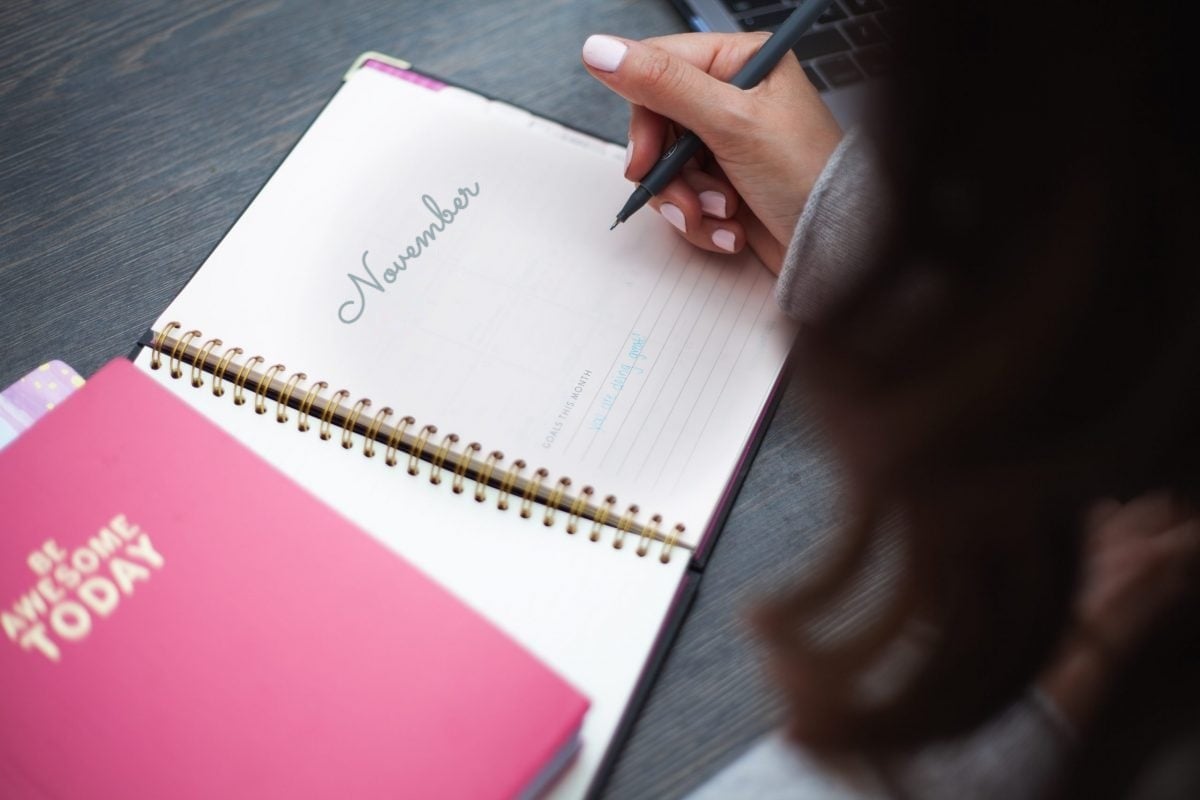
Handwriting is also embodied. We feel the paper beneath our palm, the weight of the pen, the rhythm of the words forming. It brings us back into our bodies and into the present moment. In a time when so much of life happens on screens, this return to the senses can feel deeply grounding, even restorative.
A Private Space in a Very Public World
So much of what we type today is stored, tracked, analyzed, or shared. Our digital lives leave long trails. A paper journal is one of the few truly private spaces left to us. No algorithm is reading along. No one is collecting data on our dreams, our doubts, or our 3 a.m. worries.
This privacy matters. It allows us to write the messy first draft of our lives without editing ourselves for an audience. We can be contradictory, uncertain, angry, tender, or hopeful. We can tell the truth. That kind of freedom and honest self-reflection is the foundation of developing greater self-understanding and self-compassion too.
Authorship of Our Own Lives
As AI becomes better at generating words, I believe it becomes even more important that we keep generating our own. Not because the machine’s words are bad, but because the act of finding our words is how we come to know ourselves.
When we journal, we become the authors of our own experience. We make meaning from what has happened to us. We notice patterns, celebrate growth, grieve losses, and imagine what comes next. This is the heart of what I call writing to become: using the page as a place where we continually meet and shape who we are.
No tool can do that inner work for us. It is ours to do, one page at a time.

Journal alongside a global community of journal writers
Membership in the International Association for Journal Writing gives you:
- Three live gatherings every month — Writing Alone Together Circle, JournalTalks with guest experts, and The Journal Lounge
- Every session recorded, so you can come live or catch up later
- Weekly prompts, plus the full expert interview library
- Free the moment you join: The Great Journaling Journey course ($97) and the Go To The Page speaker series ($47)
- 20% off the IAJW store and early access to new programs
$19/month or $190/year · cancel any time
Journaling as Restoration
Many of us are tired. The pace of change, the constant flow of information, and the pressure to keep up can leave us feeling depleted and scattered. Journaling offers a way to restore ourselves. Even ten minutes with a notebook and a cup of tea can help settle the nervous system, clear mental clutter, and reconnect us with what matters most.
You don’t need to write beautifully. You don’t need a perfect journal or a perfect practice. You only need to show up, slow down, breathe and begin.
An Invitation to Begin (Again)
If you would like to reconnect with the analog practice of journaling, here is a simple place to start. Find a quiet moment today, open to a fresh page, and write in response to this prompt:
What do I know to be true for me right now, in my own words?
Write for ten minutes without stopping. Don’t edit. Don’t judge. Just let your hand move across the page and see what wants to be said.
The world will keep changing, and our tools will keep evolving. But the simple, timeless act of writing our lives by hand will remain a steady companion, a place to return to, a way to come home to ourselves. This returning matters!
Journaling in the Age of AI: Frequently Asked Questions
Why journal by hand instead of typing or using an app?
Writing by hand slows us down to the pace of thought, and that gentle friction creates room for reflection. Many people feel more connected to their emotions and more honest on the page when they write by hand, and the physical act brings us back into our bodies and the present moment.
Can AI replace journaling?
AI tools can offer quick answers, but they can’t do the inner work of journaling for us. Finding our own words is how we come to know ourselves, make meaning from what has happened to us, and become the authors of our own lives.
Is a paper journal more private than a digital one?
Much of what we type is stored, tracked, analyzed or shared. A paper journal is one of the few truly private spaces left: no algorithm is reading along, so you can write the messy first draft of your life without editing yourself for an audience.
How much time do I need to journal?
Even ten minutes with a notebook can help settle the nervous system, clear mental clutter and reconnect you with what matters most. You don’t need to write beautifully or have a perfect practice, journaling is about the process not perfection. You only need to show up and begin.
Leave A Comment