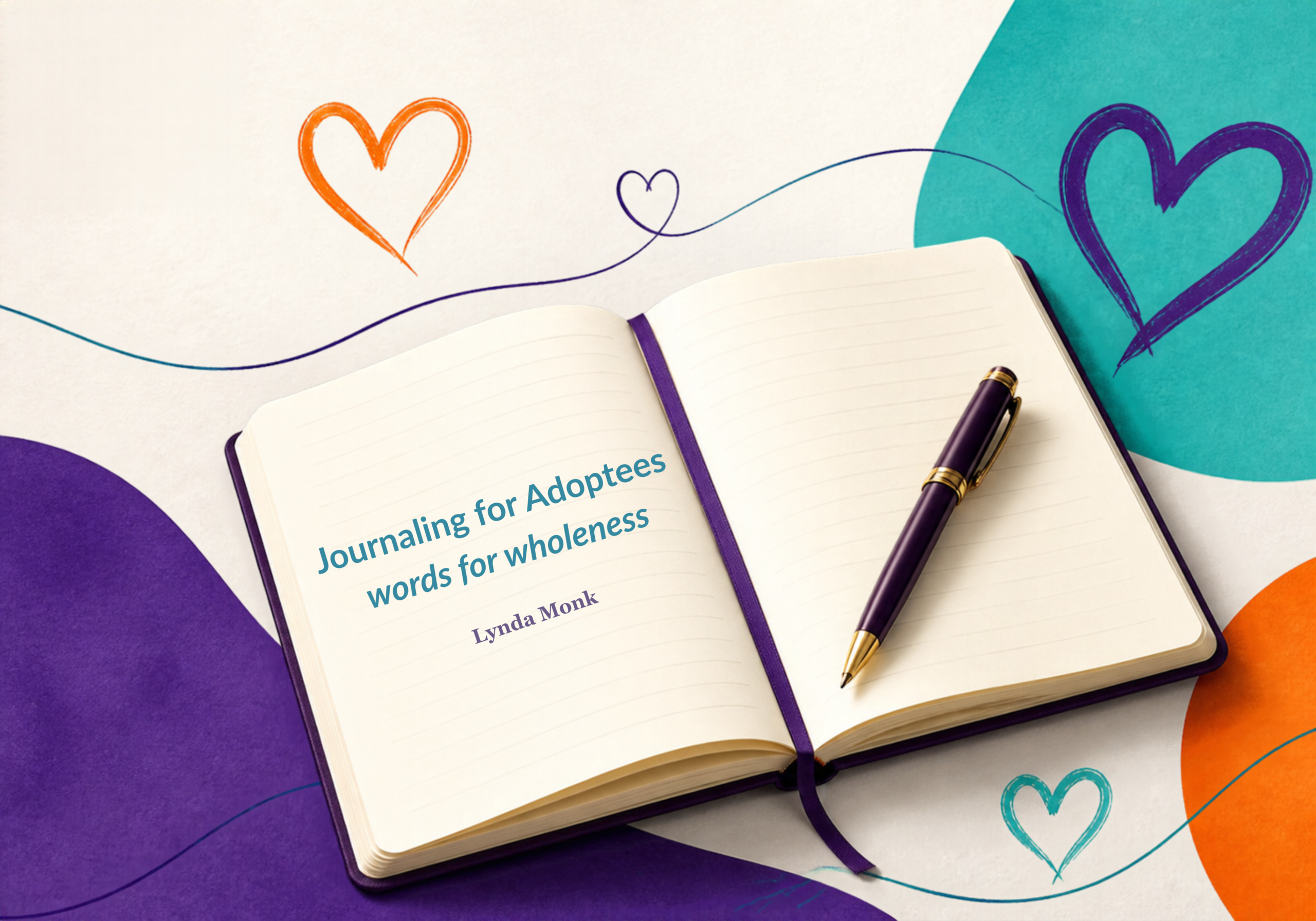
Journaling helps adoptees heal by giving us a private, non-judgmental place to tell the truth of our experience. On the page we can process emotions and memories, move from a thin story, in the words of narrative therapy, such as “I was abandoned” to a thicker story that includes our strengths, and hold both grief and gratitude as true at the same time.
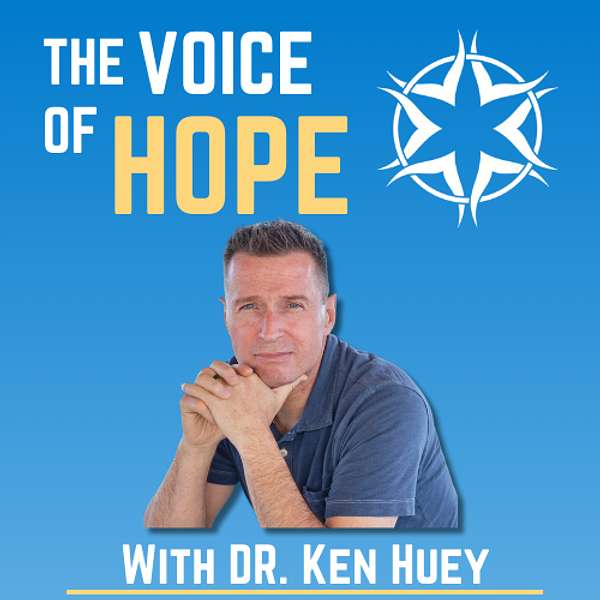
I recently had the joy of being a guest on The Voice of Hope podcast with Dr. Ken Huey, a show where, in Ken’s words, “bold leaders and healers share how they’re building hope, not just talking about it.” Ken is a fellow adoptee, and our conversation about identity, belonging, grief and healing went to some deep and tender places.
I realize I haven’t talked a lot about my experience as an adoptee until writing my book, The Adoptee’s Guide to Healing, Wholeness & Growth. Since it came out, I’ve been in all kinds of conversations like this one (on the podcast), and I’m touched by the diversity of our experiences, and by how often we have held our stories quietly inside ourselves without being met with much understanding or compassion. I’m 57 and was adopted as an infant (I was placed for adoption at 5-days old, then was in a foster home for the first 5 months of my life, and then I was adopted), and new insights and experiences are still happening for me as an adoptee.
Here are some of the themes Ken and I explored in the podcast conversation, followed by journal prompts you can use to explore your own story.
Why I Began Telling My Story as an Adoptee
I knew as a teenager that I wanted to be a social worker, and I stayed that course. During my training and early career I worked with many families who were struggling, young people in foster care, and fellow adoptees. Over time I realized that if we tell our own story honestly and deeply enough, we stand a chance of touching something in the universal story that can foster hope, understanding and compassion.
I have used journaling as my own healing tool for decades, not just as an adoptee, but also to prevent burnout as a social worker. For a long time my story lived privately in the pages of my journal. When I took a leap of faith and began sharing it through writing and speaking, people told me how much they could relate and how inspired they felt. That encouraged me to keep sharing it, believing that our stories matter!
The Silent Questions Many Adoptees Carry
Caring about our identity, our belonging, our lovability and whether we are enough is not unique to adoptees. It’s part of being human. But there are extra layers for adoptees, because we often don’t know the answers to questions about our origin stories, or our identity. We might not know where we come from, what our ancestry is, or why we were given up for adoption in the first place.
There are often a lot of missing pieces to the story, to our own story, and with that there is often a deep hunger to fill in some answers. Our sense of being a whole self isn’t only about what’s happening in the moment. It’s linked to where we come from and what we’ve experienced, and wanting more information about that is an understandable and very primal instinct. Not every adoptee lives with questions or wishes to find answers, but many of us do.

Why Writing Unlocks Emotions That Talking Might Not
Writing accesses different parts of the brain, including different emotional centres, and it can be very instinctive. It helps us get what’s on the inside out. On the page we can tell the truth of our experiences without having to censor ourselves or be judged.
When we talk, there is a listener present. When we journal, we are talking to and with ourselves, having a conversation about our life, our questions, our vulnerabilities, our hopes and our dreams. When we do this often enough, new insights come. We’re not just journaling about what we know; we’re journaling about what we wonder about. We use language to process emotions and memories, and we become the authors of our own lives rather than passive observers of them.
From a thin story to a thicker story
I’m trained in narrative therapy as well as journal therapy and other expressive arts. In narrative work we talk about thin and thick versions of our story. We can’t change what has happened to us, but we can change how we tell the story of what happened, including our experiences as adoptees.
A thin story might sound like “I was abandoned,” “I wasn’t wanted,” “I was given away,” “I’m damaged” or “I don’t belong.” These quiet scripts can run beneath the surface for adoptees, and they are heavy, painful and wounding. Through journaling we can come into thicker stories that support our strength and resilience. Instead of “I’m abandoned,” we might write “I experienced being separated from my mother at birth,” and then go further: Who am I because of that? What has strengthened me?
Being an adoptee isn’t the only thing we are. It’s one experience we’ve had, and we are lots of other things too.
Free Gift: Bonus Journaling Prompts for Adoptees
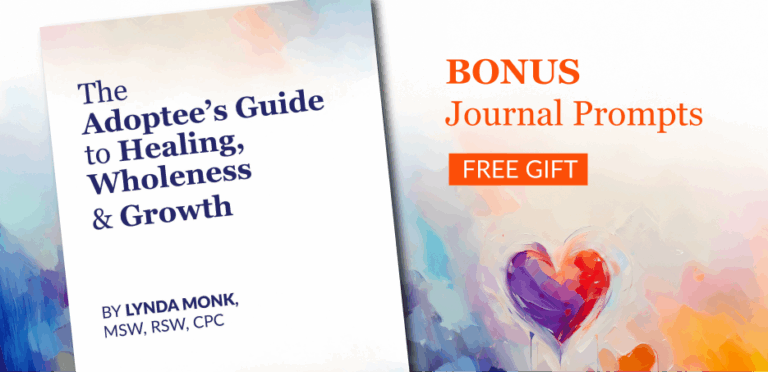
Explore your adoptee story, feel empowered, embrace your enoughness and remember your radiance. These bonus prompts don’t appear in the book, and they’re yours free.
From Secrecy and Angst to Steadiness
Ken noticed a centredness in how I talk about adoption, and asked whether it had always been that way. It hasn’t. When I was younger and knew less about my experience, there was more angst, because not knowing feels destabilizing.
My brother and I are both adoptees, from separate birth families. We were six and four when we were told, in a very simple story: we had other mothers who couldn’t keep us, and now our parents got to be our parents. Then we were told not to tell anybody. Right away there was an element of secrecy, and wherever there is secrecy there can be unanswered questions, shame and confusion. Every birthday I wondered: where is this other mother? Is she thinking about me the way I’m thinking about her?
When I finally found my biological mother, after waiting since my early twenties for my turn for a search, she didn’t want to meet. I was around 30, and I felt a painful feeling of rejection and disappointment at that time. But I reminded myself that I didn’t know her experience or why this was something she couldn’t or wouldn’t do, and I tried not to catastrophize.
That steadiness comes from years of journaling. Instead of overreacting or reactivating difficult emotions, I have gone to the page over and over again to process my feelings, to be with what is, to come back to my own centre and to reassure myself. Journaling has companioned me as an adoptee, as a mother, and now as a daughter whose adoptive dad died of Alzheimer’s and whose mom has late-stage Alzheimer’s. Our lives are many moments; some are beautiful and some toss us into deep, painful places, and we have to keep coming back. For me, journaling is a way of coming back.
Healing Means to Make Whole
One of my early social work professors, the late Ruth Suvee, always said this, and it has stayed with me:
Healing means to make whole.
Ruth Suvee
Healing isn’t about fixing some broken part of us. Wholeness is a weaving of the different parts of ourselves. I’m an adoptee, and I’m a woman, a daughter, a mother and a life partner. Healing asks us to find the and rather than the or: I was relinquished by a birth parent, and I’m worthy of love. I don’t know pieces of my story, and I can have a full life.
For me, one of the biggest “ands” has been grief and gratitude. I always felt I had to be immensely grateful as an adoptee, and I was and I am. But there was also a lot of grief. Even now, when I visit my birth mother, I feel both. I’m so happy to be with her, and when we say goodbye there is always a twinge of sadness for all we missed and all we have now. Being able to hold those complexities at the same time is at the heart of our healing, and our peace.
Journaling Up to the Moment I Met My Birth Mother
Ken shared that before his own reunion he deliberately imagined the worst, so that anything better would feel okay. I went another way: I journaled. I was journaling right up to the moment I met my birth mother.
I often use a journaling technique called scripting, where I write things as if they have already happened the way I hope they will: “I’m so happy and grateful now that…” I do it for my week, and for my goals each year on my birthday. So I scripted meeting my birth mother, and wrote about my hope that we could lead with love.
I was writing at a kitchen island, with my mom and one of my best childhood friends and her five-week-old baby nearby, when the doorbell rang. When I walked out onto the front porch, the first thing Diane did was tell me she loved me. She traced my ears with her fingers and counted my fingers, as you would with a baby, only I was a 30-year-old woman standing in front of her. In that moment I knew that no matter what happened, it was going to be okay, because love was leading the way.
What It Means to Belong to Yourself
At the end of our conversation, Ken asked what one truth about identity, healing and belonging I hoped listeners would take away. At this age, one of the things I’ve grown to appreciate is what it means to actually belong to myself.
We give away a lot of parts of ourselves, hoping other people, whether a parent, a birth parent, a partner or a child, will help our lives feel full and complete. What I’ve learned, including as an adoptee, is to ask: What is it to belong to myself? What is it to not abandon myself? What is it to be open and honest about what I need and how I meet those needs?
Sometimes the hardest person to hold with compassion is ourselves. So I invite you to explore your own experiences, to write about them, and to think about them in the most compassionate, non-judgmental and self-loving ways you can. That sounds easy enough, but it’s a deep commitment to our own wellbeing, healing and growth, as adoptees and as human beings. It is a worthy journey to take.
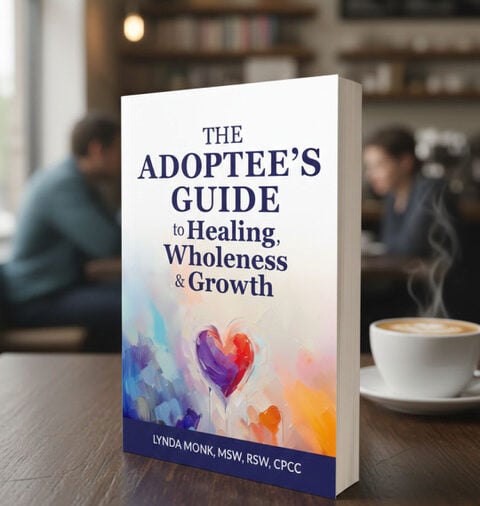
The Adoptee’s Guide to Healing, Wholeness & Growth
Part journal, part guide, part memoir, my book is an invitation to come home to yourself as an adoptee. Inside you’ll find:
- 49 healing touchstones across 7 themes
- More than 200 journaling prompts on identity, belonging, being enough and self-love
- Excerpts from my own journals as an adoptee
- Evocative quotes to companion your reflection
For adoptees at any stage, adoptive families, and the professionals who support them.
Available from Amazon, Barnes & Noble and local bookstores
Journal Prompts for Adoptees: Identity, Belonging and Wholeness
These prompts grow out of the themes Ken and I explored together. Take one at a time, write without editing or judging yourself, and be as gentle with yourself as you would be with a dear friend. You don’t have to have all the answers to begin.
Pause and reflect:
- What questions about my identity and belonging have I carried quietly? What would it feel like to write them down now?
- What is a “thin story” I tell about myself? How might I rewrite it as a thicker story that includes my strengths and resilience?
- Who am I because of what I have experienced? What has strengthened me?
- What two truths do I hold at the same time? Complete the sentence: “I ____, and I ____.”
- Where do I feel both grief and gratitude in my life right now?
- Script a hoped-for moment as if it has already happened: “I’m so happy and grateful now that…”
- What does it mean for me to belong to myself? Where might I be abandoning myself, and what do I need instead?
- How can I hold my own story with more compassion today?
Listen to the Full Conversation
Whether you’re an adoptee, an adoptive parent, a clinician, or someone navigating your own story of loss and resilience, I hope this conversation reminds you that healing isn’t about becoming someone new. It’s about becoming whole. My thanks to Ken for his warmth, his own openness as an adoptee, and the hope he brings to his listeners.
Listen to my episode of The Voice of Hope with Dr. Ken Huey »
Journaling for Adoptees: Frequently Asked Questions
Why does writing help adoptees process emotions that talking might not?
Writing accesses different emotional centres in the brain and lets us get what’s inside out without censoring ourselves or being judged. When we journal, we are in conversation with ourselves about our questions, vulnerabilities, hopes and dreams, and over time that conversation brings new insights and a sense of authoring our own lives.
What is a “thin story” and a “thicker story” in narrative journaling?
A thin story is a short, heavy script such as “I was abandoned” or “I don’t belong.” A thicker story tells the same experience more fully, for example “I experienced being separated from my mother at birth,” and goes on to include who we are because of it, our strengths and our resilience.
Where does healing begin for adoptees?
Healing means to make whole. It isn’t about fixing something broken, but weaving together all the parts of who we are and learning to hold “and” rather than “or”: I was relinquished, and I am worthy of love. Holding grief and gratitude at the same time is at the heart of healing.
How can journaling help me prepare for an adoption reunion?
Journaling can help you approach a reunion with openness rather than fear. Lynda journaled right up to the moment she met her birth mother, using scripting: writing the meeting as if it had already happened the way she hoped, with love leading the way.
Who is The Adoptee’s Guide to Healing, Wholeness & Growth for?
It’s for adoptees at any stage of their journey, as well as adoptive families and the professionals who support adoptees. Part journal, part guide and part memoir, it offers 49 healing touchstones across 7 themes and more than 200 journaling prompts.
Leave A Comment